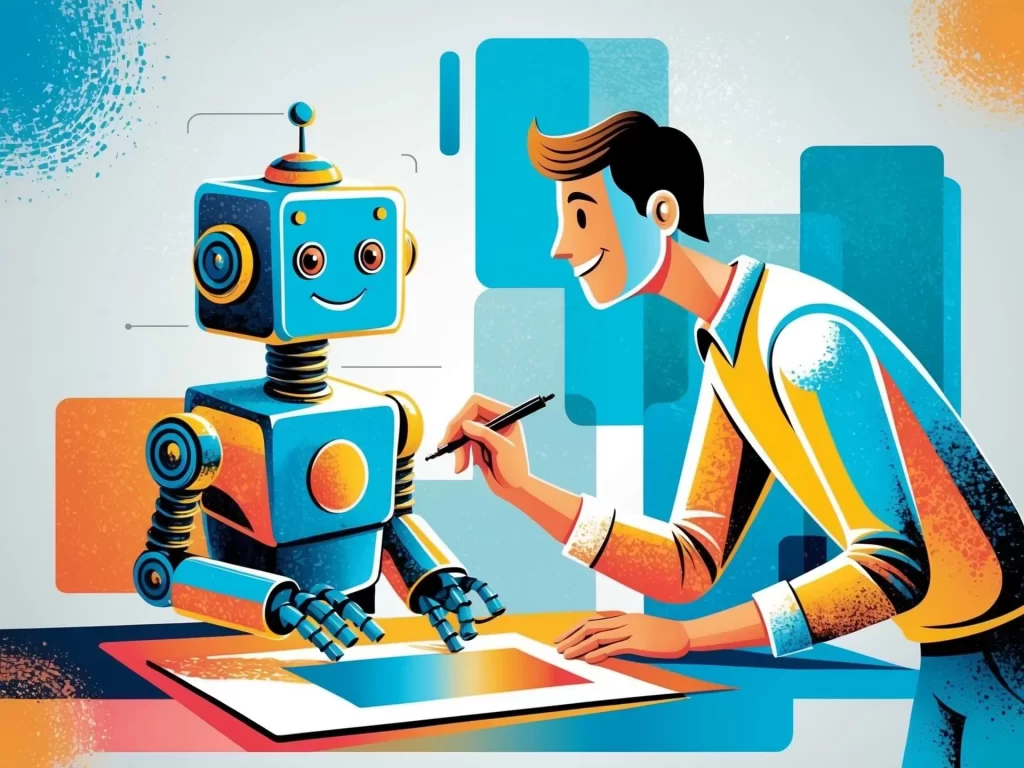

AI’s changed how people approach digital image creation. No more relying purely on cameras, illustration software, stock-image libraries. Describe an idea in plain language, get a visual interpretation back in seconds. Made image creation genuinely accessible. Also opened real questions — accuracy, originality, copyright, responsible use. All worth thinking through.
These AI image generators use machine-learning to understand prompts and create visual content based on the patterns they have learned through training. If you understand how these systems work, you can work better with them. Appreciate where human judgment still matters.
What an AI Image Generator Actually Is
Software built to create or modify visual content using AI. Depending on the tech behind it — generate an image from a written description, transform an existing picture, extend an image beyond its original boundaries, produce variations of one concept.
Modern generators train on huge collections of visual info and associated descriptions. During training, models learn statistical relationships — concepts, objects, colors, compositions, textures, styles, all connected. Give it a prompt, the system leans on those learned relationships to construct an image matching the request.
Result’s not a direct copy of a photo or illustration pulled from a database. Model generates visual information off patterns it learned. Real distinction worth holding onto when weighing both the capabilities and limitations of generative AI.
How AI Image Generation Actually Works
A lot of systems run diffusion-based techniques. Simple terms — the model learns how images change as noise gets introduced gradually. During generation, it runs the reverse — starts with visual noise, progressively refines it until a recognizable image emerges.
A text prompt guides that process. Words convert into numerical representations the model can use to connect language with visual characteristics. A prompt describing a snowy mountain at sunrise hands the system info about subject, environment, lighting, composition.
Not every modern system follows the exact same process, worth knowing. Some run transformer-based architectures, autoregressive approaches, or combine several techniques. Underlying goal’s similar, though — translate an instruction into a coherent visual result.
Writing Genuinely Better Prompts
Quality of an AI-generated image often depends on how clearly the concept gets communicated. A short prompt works fine for simple ideas. Detailed instructions give a lot more control over the final composition, though.
A genuinely useful prompt covers the subject — what should actually appear. The setting — where the scene’s happening. Composition — close-up, centered, wide-angle, viewed from above. Lighting — bright, dramatic, soft, atmospheric. Visual style — photography, illustration, painting, some other broad aesthetic. Mood — peaceful, energetic, mysterious, playful.
Instead of “a city street,” describe “a busy city street after rainfall, illuminated by shop signs at dusk, photographed from a pedestrian’s viewpoint.” Second version hands over way more info — environment, lighting, perspective, atmosphere, all in one line.
Where This Stuff Actually Gets Used
AI-generated imagery genuinely helps with brainstorming and visualization. Writers build illustrations for fictional settings. Designers explore concepts before committing to detailed production work.
Businesses use generated visuals for preliminary campaign concepts, presentation materials, social-media ideas, product mockups. E-commerce teams explore different visual environments for products. Educators build illustrations for concepts that are genuinely hard to photograph.
Creators use an AI image generator as part of a real experimentation process too, especially exploring several visual directions before deciding which concept deserves further development.
Genuinely useful for image-to-image workflows too. Instead of starting on a blank canvas, provide an existing image, request changes to its appearance, setting, composition, artistic treatment. Makes visual experimentation considerably faster.
The Real Limits Worth Understanding
For all the progress, AI image generation isn’t perfect. Models still produce inaccurate details, inconsistent objects, distorted anatomy, unusual arrangements. Text inside generated images needs careful checking too.
Consistency’s another real limit. Creating one convincing image’s different from creating a sequence where the same character, product, or environment stays visually consistent throughout. Professional projects often need additional editing and quality-control on top.
Worth reviewing generated content before it ever publishes. An image looking realistic doesn’t automatically mean it’s factually accurate. Matters a lot in journalism, education, product information — anywhere viewers could mistake fictional imagery for documentary photography.
Copyright, Privacy, Using This Responsibly
Generative AI raises real questions around ownership and training data. Rules on AI-generated works vary between jurisdictions, still developing too. Understand the terms of whatever service is being used. Think through the legal requirements that actually apply to the project.
Privacy deserves the same attention. Uploading personal photos, confidential documents, unreleased products, other sensitive material to an AI service creates real risk, depending on how that service handles submitted data.
Responsible use means avoiding misleading representations too. If an AI-generated image could reasonably get mistaken for a real event or person, identifying it as generated or manipulated is probably the right call.
Where AI-Assisted Visual Creation Is Actually Headed
AI image generation’s becoming part of a bigger creative workflow. Not just a standalone novelty. Current developments increasingly focus on giving creators more control — composition, editing, consistency, real interaction with generated content. Recent creative-industry projects show AI combining with traditional photography, illustration, design. Not necessarily replacing them.
Most useful approach — treat AI as one piece of the creative process. Human direction still matters — deciding what an image should communicate, checking whether the result’s accurate, refining visual details, deciding whether the finished work actually fits its intended audience.
As this tech keeps evolving, understanding both its creative possibilities and its real limitations is only going to matter more for anyone working with digital imagery.

Raghav is a talented content writer with a passion for creating informative and interesting articles. With a degree in English Literature, Raghav possesses an inquisitive mind and a thirst for learning. Raghav is a fact enthusiast who loves to unearth fascinating facts from a wide range of subjects. He firmly believes that learning is a lifelong journey and he is constantly seeking opportunities to increase his knowledge and discover new facts. So make sure to check out Raghav’s work for a wonderful reading.